Slow Season Survival: Why the Smartest Contractors Turn One Job Into Four Before Winter Hits
As winter nears, contractors often see lead flow dry up, and margins tighten. Most existing customers postpone non-essential projects as the weather cools, so paid ads suddenly cost more for fewer conversions.
In fact, industry data shows that many businesses cut ad spend in early winter, driving up ad costs. One report found that cost-per-thousand-impressions (CPM) jumped by about 25% in December compared to the fall.
Yet homeowners and referred customers still plan future projects: over 65% of prospective new customers continue researching contractors online before deciding whom to hire.
The good news for savvy contractors is that nearly all homeowners trust word of mouth more than ads. In practice, this means every satisfied customer can effectively market your business to their neighbors at no extra media cost.
Marketing experts even say the slow season is “the perfect time to double down on your referral network,” since happy past clients become your strongest advocates and brand ambassadors.
How the Smartest Contractors Beat the Slow Season Using a Customer Referral System
As demand slows before winter, the smartest contractors focus on multiplying value from every completed job. A well-designed customer referral system turns satisfied clients into a steady source of new work without increasing marketing spend.
Instead of chasing cold leads, contractors leverage trust, timing, and service satisfaction to generate repeat and referral jobs automatically. By embedding referrals into invoices, follow-ups, and technician workflows, businesses can create predictable growth even during slow seasons.
Modern customer referral systems automate tracking, rewards, and communication, eliminating manual effort while boosting participation. The result is higher job volume, stronger customer loyalty, and consistent revenue when seasonal demand drops. In this blog, we'll explain the typical winter slowdown and why referrals and referral program software outperform ads when lead flow drops.
Key Takeaways
- Paid ads produce weaker ROI during off-season months.
- Referral tracking software delivers warm leads with much stronger intent.
- Each completed job can unlock a whole neighborhood’s demand cluster.
- Automated referral marketing dramatically boosts referral volume before winter.
- MyClientBase provides a well-designed referral program, from project tracking to referral capture.
Here's what separates contractors who struggle through winter from those who thrive
Most contractors see the slow season coming and hope for the best. The smart ones? They're already three referrals deep. The question: Which one are you?
Book a MyClientBase demo; it takes 20 minutes and changes how you think about slow season.
Understanding the Customer Referral Model for Winter Survival
A customer referral system is a formal program built into the workflow that encourages clients to recommend you. It isn’t just asking once for recommendations; it’s a structured sequence that makes referring automatic and easy for new customer acquisition.
For contractors entering winter, a strong referral system is a lifeline. Rather than hoping word of mouth just happens, you create a reliable stream of new project leads from satisfied customers.
Key elements of an effective system include:
- Clarity (customers know precisely how it works)
- Simplicity (little effort required)
- Automation (automatic follow-ups)
- Transparency (everyone sees their reward status).
Why Referral Programs Drive Growth When Lead Flow Drops?
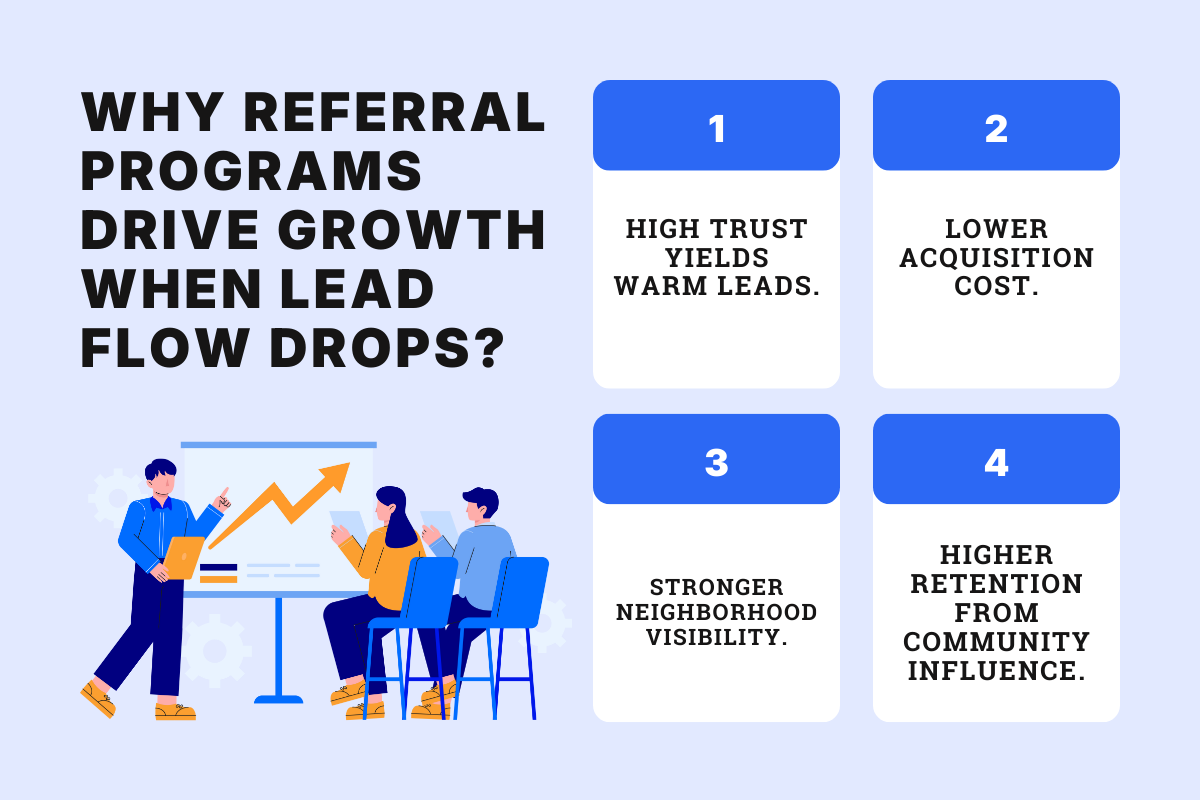
A. High trust yields warm leads:
- Referrals come from existing customers, so new leads start with built-in credibility.
- For example, people referred by a friend are roughly 4 times more likely to purchase and convert up to 30% better than cold ads.
- Referral leads already have your trust badge before even talking to you, so sales cycles are shorter.
B. Lower acquisition cost:
- With referrals, you pay only on results.
- Referral marketing with unique links drastically lowers Customer Acquisition Costs (CAC) by leveraging happy customers as advocates, paying only for successful conversions (rewards) rather than expensive ads, leading to higher trust, better-quality leads, and greater Customer Lifetime Value (LTV) than overall traditional marketing.
- Happy customers cost almost nothing to activate; in contrast, ad campaigns keep burning budget.
C. Stronger neighborhood visibility:
- Word-of-mouth amplifies your local presence. Every satisfied customer who recommends you is effectively a walking billboard in your service area.
- Over time, this builds awareness in target neighborhoods without any extra ad spend.
D. Higher retention from community influence:
- Referred customers tend to become loyal customers.
- Companies with formal referral programs report up to 69% faster close times and about a 10% increase in customer lifetime value.
How to Set Clear Referral Objectives Before Winter?
Step 1: Define What Success Looks Like
Before you launch your referral campaign, take time to outline exactly what you want it to achieve. This could include a target number of referral-based bookings during your slow season, or a goal to increase the number of customers who sign up for a winter maintenance plan through referrals.
Step 2: Align Business Growth Goals With Your Services
Your objectives should match your specialty. A roofing contractor might focus on pre-winter inspection calls. An HVAC business might aim to fill up its calendar with off-season tune-ups. Tailoring goals by trade ensures your referral program supports your highest-priority services.
Step 3: Identify and Track Key KPIs
To know if your referral system is working, track specific performance indicators. These can include:
- Participation rate: What percentage of your customers are actually referring others?
- Referral close rate: How many of those referred leads become paying jobs?
- Referral revenue: What’s the total income generated from referred projects?
These numbers show the real impact of your successful program and help you identify what needs adjusting.
Step 4: Use Goals to Guide Your Automation
Once you’ve set targets, you can automate with purpose. For example, if your goal is to secure 30 new referrals by January, you can schedule timely email or text reminders to go out after each job.
Curious to know why referral programs work better than your sales teams. Read here: Referral Programs Are the New Roofing Sales Team.
Offering a Reward System That Drives Pre-Winter Engagement
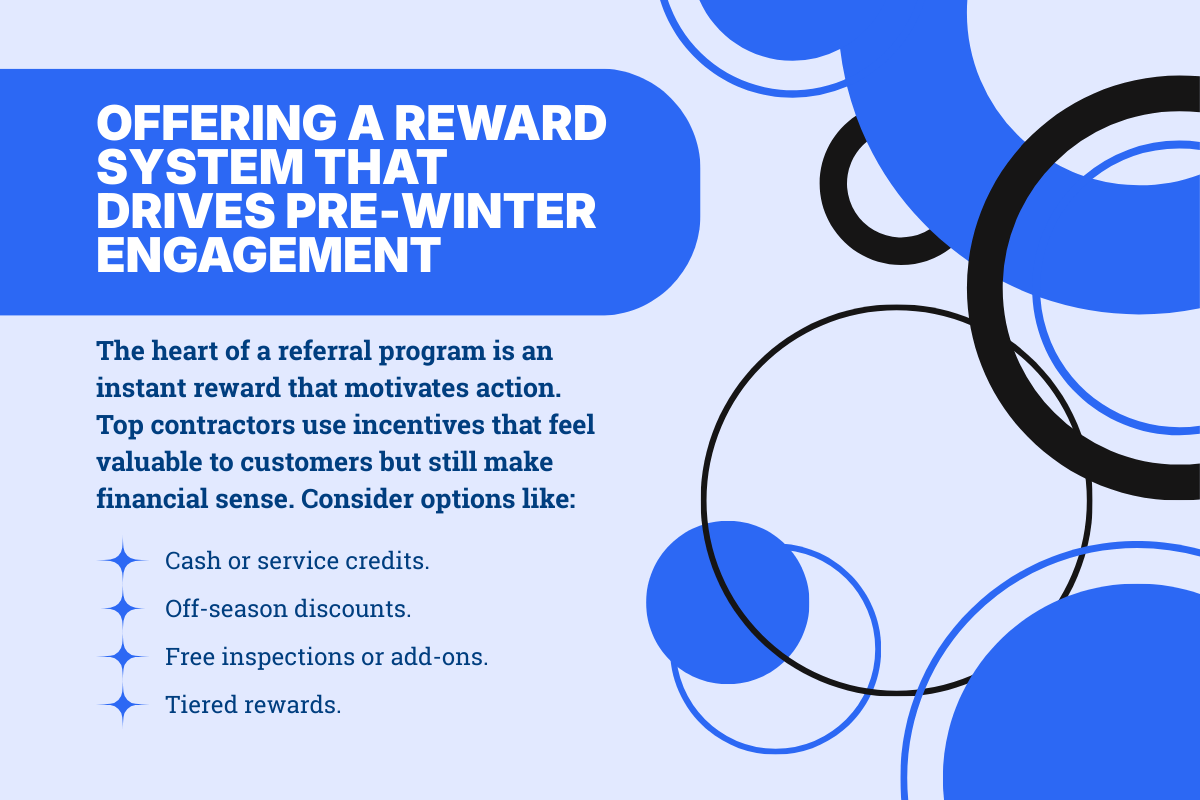
The heart of a referral program is an instant reward that motivates action. Top contractors use incentives that feel valuable to customers but still make financial sense. Consider options like:
- Cash or service credits. A $50 monetary reward or a credit toward a future service (e.g., “$50 off your next maintenance” for each successful referral) is very compelling.
- Off-season discounts. Offer a discount on services that occur in slow months (e.g., a discounted winter HVAC check-up) as a referral thank-you.
- Free inspections or add-ons. A free gutter inspection or safety check can be a low-cost yet high-perceived-value reward.
- Tiered rewards. Make it a game: offer bigger rewards for the best customers who refer more jobs (e.g., a larger bonus after three referrals).
The correct incentive balances cost and real value. A small upfront reward can multiply into larger returns through repeat business and neighbor referrals.
In fact, research shows referral programs with incentives have about 300% higher conversion rates than those without. When customers see a clear and attractive reward, they are far more likely to spread the word.
Find out how a referral system gets you new leads in just a few clicks with minimal effort.
Building a Frictionless Referral Experience for Homeowners
The easier you make it for customers to share you, the more referrals you’ll get. Aim to reduce effort at every step. For example:
- Include referral links to dedicated landing pages or personalized links, such as a “refer a friend” URL, on your invoices and emails.
- Put QR codes or referral codes on invoices or service vehicles that link to a simple referral form.
- Send SMS or email thank-you messages after a job is completed, with a quick “refer a friend” button.
At each touchpoint, clearly explain how the referral works and what’s in it for them. For instance, a friendly post-service text might say, “Thanks for choosing us for your new roof! Refer a neighbor with this discount code for $50 off your next service.”
Automating the Entire Customer Referral System With Pre-Winter Urgency
Why Manual Tracking Fails?
Trying to track referrals through memory, notebooks, or spreadsheets creates gaps. Leads get forgotten, escalating rewards are delayed, and customers lose interest. As winter approaches and workloads shift, these mistakes become even more common. Automation solves this by capturing every referral the moment it happens.
Core Automation Features You Need:
A reliable referral system or marketing platform should include features that do the heavy lifting for your team during the onboarding process.
Look for tools that offer:
- Real-time referral capture so no lead slips away.
- Instant notifications that alert both you and the referrer when a new lead enters the system.
- Automatic reward tracking to keep everything fair and transparent.
- CRM or job-tracking integration so your referral activity stays connected to your ongoing projects.
These features ensure your program runs smoothly even when your team gets busy.
How Automation Works Inside Your Workflow?
Platforms like MyClientBase connect referral activity to your actual project timeline. When a job is completed, the system automatically sends a referral invite. When a referred lead comes in, your team receives an alert instantly.
As soon as that referral turns into a booked job, the reward balance updates without you touching a spreadsheet. You can also set custom triggers, such as sending a referral invite after an invoice is paid.
Want to know how the referral system saves your money? Check this: How a Referral Program Saves You Thousands on Ads and Brings Better Leads
Marketing Your Customer Referral Program for Maximum Winter Reach
Let homeowners know your referral program exists. Use multiple channels to raise awareness:
- Valuable feedback: A quick SMS right after the job reminds them to refer.
- Follow-up emails: A brief thank-you email with a referral invitation and link.
- Print materials: Put referral QR codes on receipts, business cards, or vehicle decals.
- Technician scripts: Train your crew to mention the referral program during final walkthroughs.
- Website banners: Add a “Refer a Friend – Earn $50” banner on your homepage.
- Social media: Share posts thanking customers for referrals or announcing a limited-time referral contest.
Embedding invites in review requests or satisfaction surveys can also work. The more visibility your referral program has, the higher the participation.
Mistakes That Reduce Referral Output of Your Existing Systems
Contractors sometimes trip up with their referral campaigns. Common pitfalls include:
- Overly complex rules: If customers aren’t sure how referrals work or what they’ll get, they won’t bother. Keep the program straightforward.
- Low promotion frequency: Mention your referral offer consistently – don’t launch it once and forget. Remind customers with each invoice and follow-up.
- Slow reward delivery: If a referrer has to wait weeks for a bonus, they lose interest. Issue rewards promptly upon job completion.
- Manual tracking (spreadsheets): Relying on Excel invites errors and lost referrals. Manual systems can’t scale.
Scaling Your Referral Engine Into a Continuous Growth Loop
Once the basics are working, take your referral system to the next level. Advanced strategies include:
Strategy 1: Milestone rewards: Offer a bonus or exclusive access to store credit when a customer meets referral thresholds (e.g., extra perks after three referrals).
Strategy 2: Gamified tiers: Create levels (silver, gold referrer) with increasing benefits and brand loyalty. Both the referrer and the new customers love status games.
Strategy 3: Partnerships: Team up with related local businesses (like realtors or landscapers) for cross-referrals. Each partner can offer your program to their customers and vice versa.
Strategy 4: High-value segments: Identify your best referrers (maybe those who referred large projects) and send them premium rewards or thank-you gifts.
Strategy 5: Automated NPS triggers: If someone gives you a top score on a satisfaction survey, immediately invite them to join the referral program, they’re already your biggest fans.
By layering these tactics, you create a continuous growth loop. Each new referral customer becomes a potential referrer, and so on.
Over time, the program sustains itself. Even after winter, you’ll have built a referral culture that delivers steady leads year-round. In essence, technology and incentives turn your customer base into a marketing force multiplier.
Technology’s Role in Winter-Proof Referral Systems
Using tech makes a huge difference. With modern referral platforms, the entire process is transparent and trackable. In a manual system, referrals can get “messy,” but automated tools with detailed analytics keep everyone on the same page.
With software, customers and your team can check the current referral status on a mobile dashboard. Payouts happen automatically once a referral closes. That means no double payments and no guesswork. It also means data-driven decisions: you can see which referral channels (email campaigns, text, or invoice code) deliver the best results.
In short, technology transforms a single job into multiple warm opportunities by keeping the referral machine running smoothly at all times.
Conclusion: Create a Winter-Ready Growth Loop
Referrals are the compound interest of word-of-mouth marketing. When each customer becomes a promoter or best advocate, you build a predictable pipeline with a win-win situation. With the right system, referrals convert faster and cost less, turning one job into several growth opportunities.
Automation means you get all the benefits (higher close rates, more sales, retention rate, customer loyalty) with minimal ongoing effort. The small businesses that win in winter are those who prepared in fall: they asked for referrals, rewarded them promptly with clear instructions, and let user-friendly software keep clients engaged.
Now is the time to make every completed job start a new conversation in the neighborhood. Automate your contractor referral system with MyClientBase today and watch each project multiply itself, no extra winter ad budget required.
Why MyClientBase?
You've now seen how a customer referral system works. The question isn't 'does it work,' the question is 'how fast can I implement one?' See how MyClientBase works for your business.
Book your personalized demo now; it takes 20 minutes and changes how you think about slow season
FAQs
Q.1 What are the basic steps in a referral process?
A typical referral workflow is: (1) let customers know about your program, (2) collect referred leads (via forms, links, or direct entry), (3) track each referral in your system, and (4) reward the referrer when a referral books work.
Q.2 How can I encourage customers to refer my business?
Ask satisfied clients to refer friends while the job is fresh, and make it easy for them. Provide one-tap sharing via text or QR code, and offer a clear reward. Tools like MyClientBase can automate sending referral invites after each job, and even integrate the ask into satisfaction surveys or review follow-ups.
Q.3 What is a customer referral program?
It’s a structured system that turns happy customers into active lead sources for you. In a referral program, customers share your business (via a unique link or code), and you reward them when their friends buy from you.
Q.4 How do I track and measure referrals?
Use a centralized CRM or referral software. Every referral should be tagged to the original customer in your database. Track metrics like how many referrals each customer sent, how many of those converted, and what revenue they generated.